Prompt breakdown · 11 August 2026
From visual idea to production brief: how I structure an AI prompt
A visual concept becomes useful when it is organised around a purpose, a format and clear production decisions. This is the framework I use before a prompt reaches an external image or video tool.
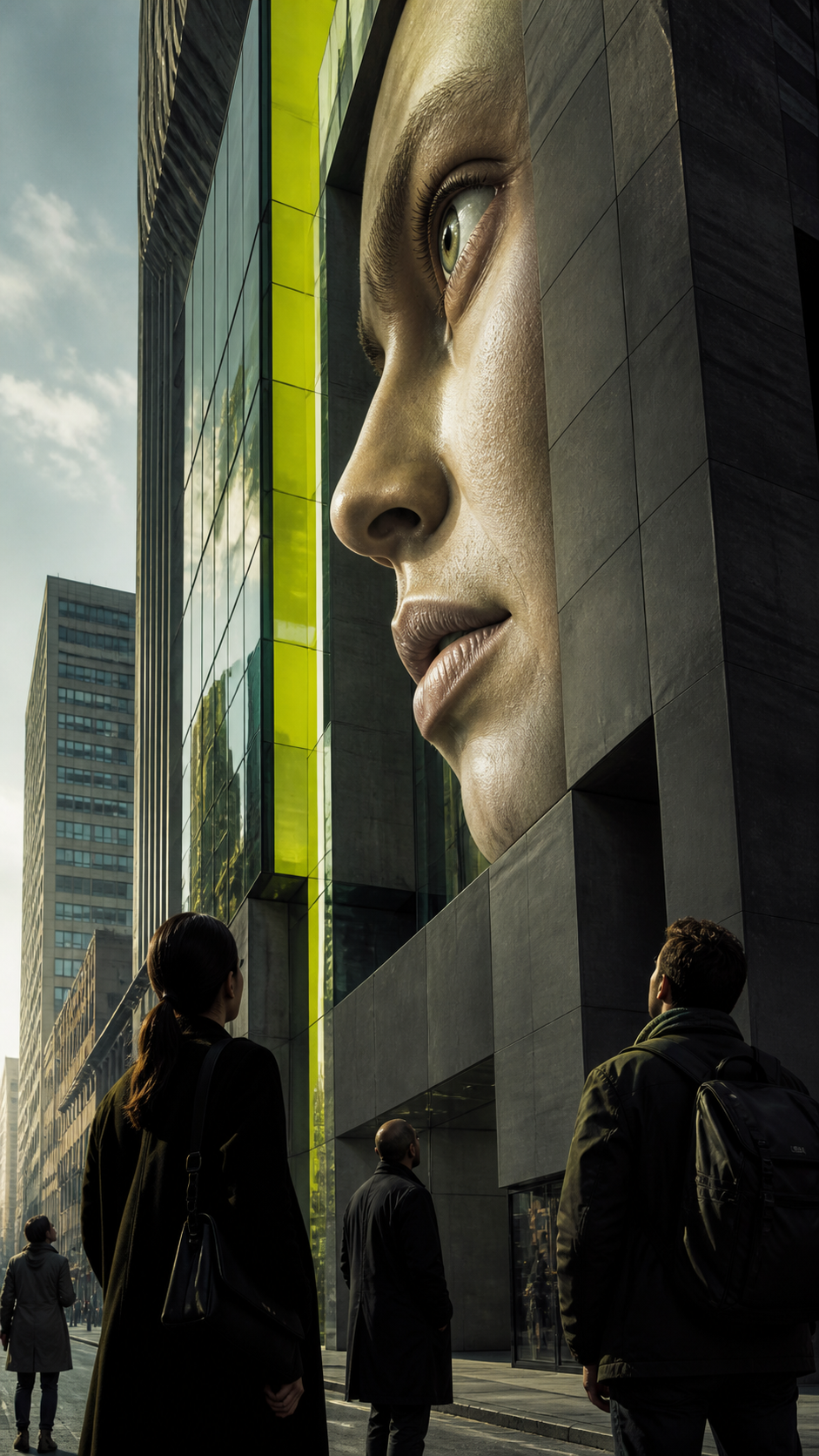
I am Paolo Barranca, a London-based creative producer and content strategist. The public “Giant Face Transformation” concept in my Prompt Library is a useful example of how one striking image can become a focused production brief. I am sharing the decision-making framework here, not the complete private prompt.
1. Give the idea a purpose
Before adding visual detail, I decide what the piece needs to do. Is it a campaign hook, a short-form opening shot, a transition, a product metaphor or a standalone visual? A prompt without a purpose can produce an attractive image that has no useful place in the wider content plan.
2. Choose the production format
The intended platform changes the brief. A vertical short needs a clear focal point, safe space for interface elements and movement that reads quickly on a phone. A landscape campaign image can use a wider composition and slower visual discovery. Format is a production decision, not an export setting added at the end.
3. Define the subject and transformation
For this concept, the essential idea is the relationship between a human face and an architectural surface. The brief must identify what changes, what remains recognisable and how the two elements connect. That gives the creative tool a visual action instead of a loose theme.
4. Direct composition and movement
I then describe point of view, scale, focal priority, lighting logic and, when the target is motion, the direction and pace of change. These choices help the result feel intentional and give an editor or producer something concrete to review.
5. Add useful constraints
Constraints protect the concept. They can prevent unreadable text, unwanted logos, distracting objects, unstable anatomy or changes to an important reference feature. The goal is not to make the prompt longer. It is to remove ambiguity that would create avoidable revisions.
The prompt is part of the workflow
My website develops and organises prompts; it does not claim to generate the final image or video. The finished media is produced in an appropriate external tool. Inside AI Content Studio, the creative direction can stay connected to references, versions, destinations and review notes so the work is easier to find and improve.